2200K or 2700K? The single number that most decides how a room feels—explained without the physics degree.
Of every specification attached to a light fixture, one number does more to decide how a room feels than all the others combined: color temperature, written in kelvin. It describes where the light sits on the spectrum from amber to blue-white—and choosing it well is less about physics than about knowing what you want a room to do.
The scale, in human terms
2200K is candlelight—deeply amber, unhurried, flattering to skin and to wine. 2700K is the classic warm interior: the glow of the incandescent bulbs most of us grew up with, warm without announcing itself. 3000K is a soft white that begins to feel composed and current; kitchens and bathrooms often live here. 4000K is neutral, clean, and efficient—excellent for a workbench, punishing for a dinner party. Beyond that lies daylight territory, which belongs in offices and operating theatres and almost never in a home.
The pattern underneath: the warmer the light, the more a space feels like evening; the cooler, the more it feels like work.
Warmth suits glass
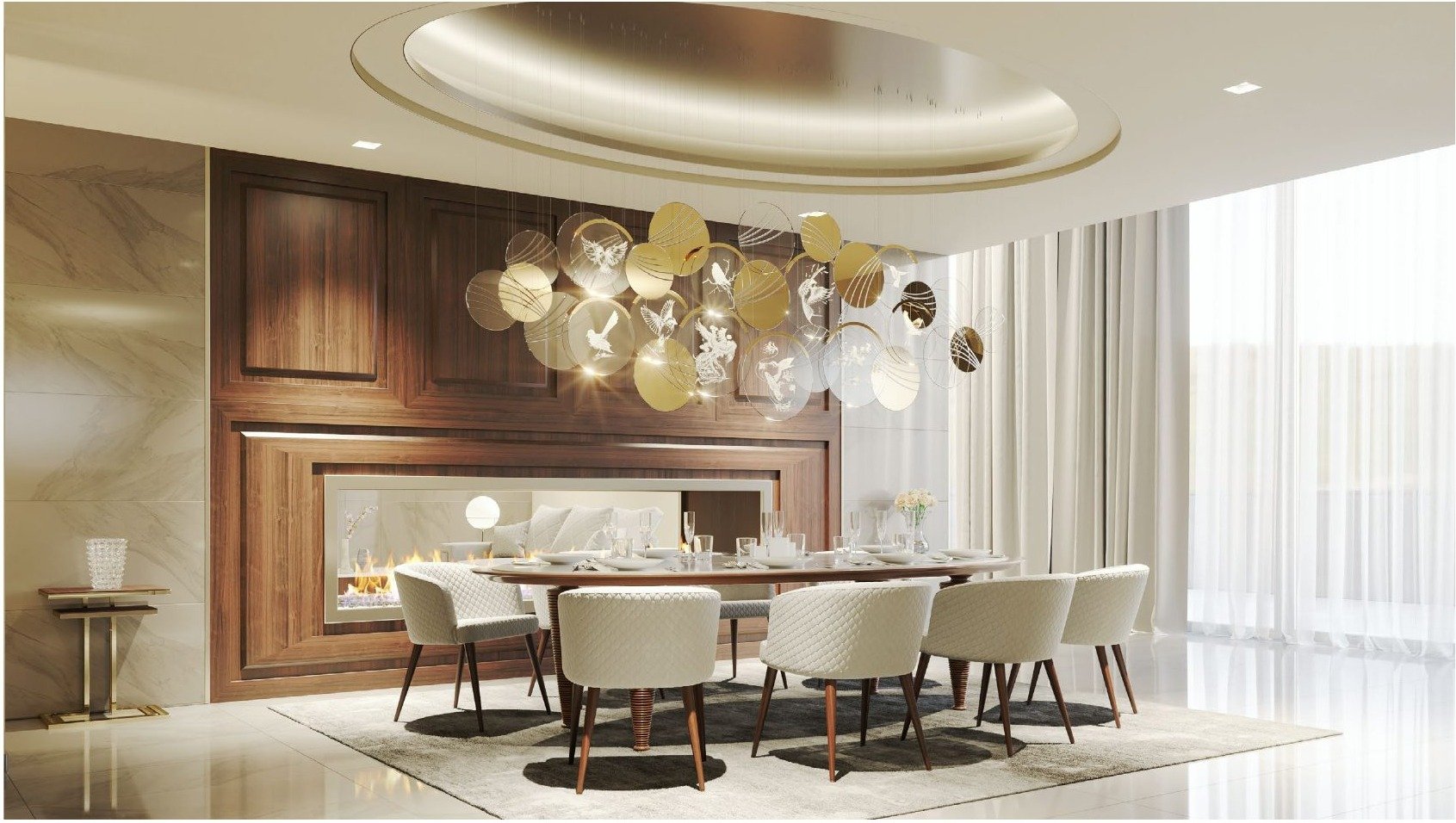
Decorative glass has a strong opinion about temperature. Warm light—2200K to 2700K—brings out the material's depth: amber tones ignite, clear crystal sparkles gold instead of white, and the whole composition reads as an object of atmosphere. Push the same glass to 4000K and it turns documentary; accurate, and charmless. This is why sculptural lighting is almost always specified warm, and why a piece intended to anchor a living or dining space rarely goes above 2700K.
One room, one temperature
Mixing temperatures within a single view is the most common lighting mistake in otherwise careful interiors. A 2700K chandelier over the table, 4000K downlights on the same sightline, and the room quietly stops making sense—the eye reads the mismatch as wrongness long before the mind names it. Choose one temperature per room, or at most a single warm pair one step apart between ambient and accent layers.
And remember that dimming is temperature's partner. A warm source dimmed low completes the evening; specify smooth dimming and the same fixture serves the whole day.
When in doubt
For living rooms, dining rooms, bedrooms, and anywhere atmosphere outranks task: 2700K, dimmable, without hesitation. Reserve 2200K for the most intimate settings, 3000K for kitchens and baths. If a decision resists being made on paper, it is a fine question to bring to a consultation—temperature is tuned, not guessed, and seeing two options lit side by side settles most debates in a minute.